

Santosh Ghosh
“Ranjayati iti raga” = “that which colour, is a raga”.
Raga is the basis of melody in Indian music and a substitute for the western scale. It is the attempt of an artistic nation to reduce to law and order the melodies that come and go on the lips of the people. In Raga Vibodha, it is defined as arrangement of sounds, which possesses Varna, furnishes gratification to the senses and is constituted by musical notes.
The term Varna refers to the act of singing, and is of four kinds, viz. : Sthayi- repetition of the same sound, Arohi-ascent, Avarohi-descent, Sanchari-ascent and descent mixed. Strangway defines raga as “an arbitrary series of the notes characterized, as far as possible as individuals, by proximity to or remoteness from the note which makes the tessitura ( general lavel of the melodies ), by a special order in which they are usually taken, by the frequency or the reverse with which they occur, by grace or the absence of it.
And by relation to a tonics usually reinforced by a drone. A simplified from of this might run : Ragas are different series of notes within the octave, which form the basis of all Indian melodies, and are differentiated from each other by the prominence of the certain fixed notes and by the sequence of particular notes. We may perhaps find in the term ‘melody-type’ the best way to transcribe raga in English.
According to ancient musical theory, there are three important notes in the raga. These are the GRAHA, the AMSA and the NYASA. The Graha is the starting note, the Amsa the predominant, and the Naysa the ending notes. The Amsa is also called the Vadi. Very little importance is attached to the Graha and the Nyasa today, and it is quite possible that they were, in the Ratnakara, the technical terms for the terminal notes of the tertrachord and not of the raga. The Amsa, however, is all important and is called the jiva or ‘sole of the raga’. The position of the Amsa has much to do with the general contractor of the raga. It is occasionally varies between two notes. The Amsa is not so distinctly differentiated in the music of the south, and this may point to a further development there.
All the characteristics of the raga are embodied in its Murchhana or That, which are the names now given in the south and north respectively to the raga basis expressed in notes. The Amsa, and also the peculiar sequence and grace note of the raga, are shown in this, which includes both ascent and descent. It includes all the essential facts about the raga which the musician should know before composing and any melody in it.
Raga have probably originated from four main sources : 1. Local tribal songs ; 2. Poetical creation ; 3. Devotional songs ; 4. Composition of scientific musicians. Many of these sources may be traced in their names. Bhairavi means ‘an ascetic’ ; Hindol is ‘a swing’ ; Kanada refers to the Carnatic ; Multani means ‘belonging to the city of the Multan’ ; and Megh means ‘the rainy season’, and so on.
We can see the same processes of formation going today. Our poet Rabindranath Tagore creates new melodies from the old folk songs of Bengal. Some one finds an old portuguese melody and puts it into and Indian setting and calls it Portuguese Tappa, as it is modelled on the well known Hindustani Tappa form of melody. A famous musician takes and old raga and introduces some unconventional variation, and the result becomes a new raga named after him. Miyan Tansan, for example, introduced Ga and both varieties of Ni into the raga Mallar, which omits them as rule ; and the result is the raga Miyan-ke-Mallar.
Since there are quite a number from varieties of the raga Mallar by different musicians. Then others combined two or more ragas into a new one. Amir Khusro took Hindol and a Persion melody, Mokam, and formed Yaman. Another takes Saranga, Sindhu and Mokam, and the result is a new raga Ushaq. Or a northern musician comes across a good southern raga, and introduces it in southern form into the northern music. As Kirloskar of Pune the dramatic, did with the southern ragas Kamboj and Arabhi. Southern musicians do the same with the northern ragas, sometimes prefixing the term Desika or Hindustan, as Hindustani Bihag, Desika, Kamboja so on. This is a living process which we may watch today all over India.
The question of the systematic classification of the ragas presents considerable difficulty. For the last 500 years the south has had a more or less uniform system, which has crystallized into the present form. Northern musicians, however, have had as many systems as musicians. Bharata gives only fourteen melody basis, which has calls Jatis and Murchhanas, developed from either the Sa or the Ma-grama. These were developed by shifting the tonic or starting note to each note of the scale, thus forming seven for each mode. This same practice has been followed in the early Tamil books.
Then Sarangadev enumerate 264 ragas under the two gramas. The Ragmala of the master Pundarika adopts the northern method of classifying ragas into six principal ragas, with wives, or secondary ragas, and children, or derivatives ragas. The two latter are called ragani and putra. A considerable number of new raga are added by him. The Raga Vibodha adopted the southern system and recognized 23 primary ragas with large number of secondary ragas.
The primary ragas of this work are Mukhari ( i.e Kanakangi ) Ravagupta, Samavarali, Todi, Nadaramakriys, Bhairava, Vasanta, Vasanta-bhairava, Malavagaula, Ritigaula, Abhiranata, Hamira, Sudhdha- varali, Suddharamakriya, Sri, Kalyani, Kambodhi, Mallar, Samatha, Karnatagaula, Desakshi, Suddhanata Saranga. Somanatha carefully describes each raga and many of them are found in the same form today.
The Sangita-Darpana builts up a most fanciful theory on the northern model, and this has nominally remained the principal theory of the north until today. Bhavabhatta attempts a rearranged of the northern ragas notes on a somewhat similar system to that of the south, adopting twenty primary ragas. Then Muhammad Razza suggested a new arrangement of the northern system on the principal that there should be some real affinity between the raga, ragani and putra, a principle which seems self-evident, but which has not been really adopted by the north ; for it is almost impossible to get from the northern musician a responsible account of the basis of the present day classification. Meanwhile, in the south, Venkatamakhi provided a sound system based on scientific principles which has continued to this day.
WOMAN’S RAGA FESTIVAL SONG
We have very interesting corroboration of the existence of some of these melodies at last some time prior to the tenth century in the archaic Bengali songs of the Buddhist mystic of the Sahajiya sect, by name siddbacarya Luipa, whom Haraprasad Sastri, associating with Dipamkara Sri-jnana, places in the tenth century ( Sastri : 1323, Bangali clander). While Benoytosh Bhattacharya believes Luipa lived about 669 A. D. ( Bhattacharya : 1932). Each of these songs collected under the name of ‘Chryacaryaviniscaya’, bears on the heading of each song. The following names of ragas are indicated :
Patamanjuri, Gauda, Gavada ( Gauda), Aru, Gunjari, (?Gunjari), Deva-kri, Desakh, Bhairavi, Kamod, Dhanasi, Varadi, Valaddi, Mallari, Malasi, Malasi-Gavuda ( Malava-Gauda), Kahnu-Gunjari, Vangala, Sivari Savari ( Saveri). Nearly all of these melodies are cited in the Sangitaratnakara.
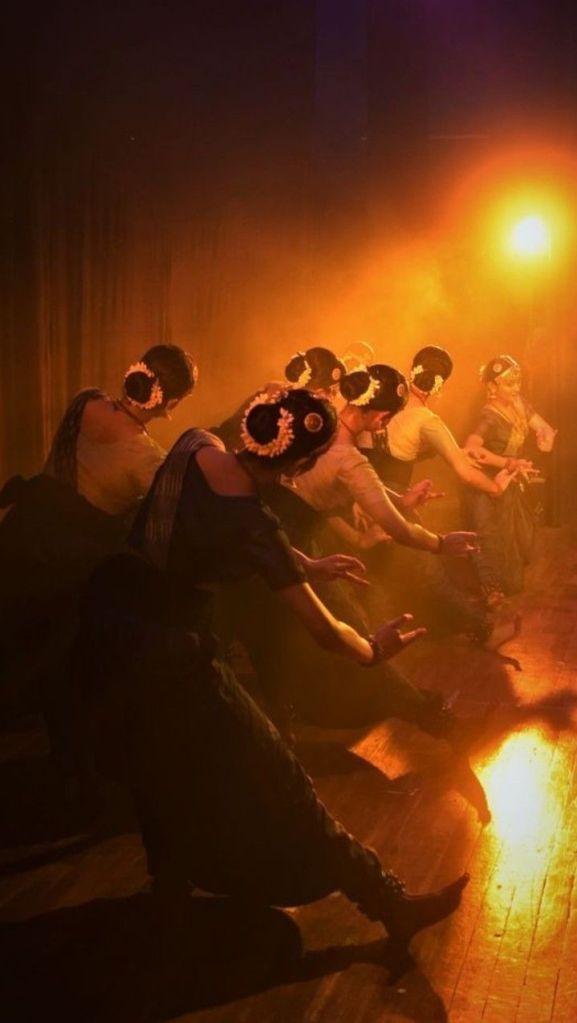
A very interesting reference to the used of the melodies in connection with rituals is furnished by the rules as to the consecration of the Nava-patrika ( a new plantain shoot, symbolising the great goddess) laid down in the Kalika-puràna in connection with the initiatory ceremonies of the Durga-cult, the great autumnal festival ( saradiya-puja ) still current in the Bengal.
The rules and the formulas for the consecration are not set out in the printed edition of the Puràna, and have been borrowed, here, from a manuscript in the possession of the professional priest. The ritual consists of bathing and consecrating the ‘new shoot’ by waters from eight defferent sources collection in eight defferent jars. As each jar of the water in poured over the shoot, it has to be accompanied by singing a particular raga, with specified manner of drum accomplishment, together with the song or recitation of the mantram invoking the auspicious influences of eight different gods and celestial beings :
The Lustration of the New School : It should be placed in the court-yard of the house and then consecrated by bathing with water from the eight jars.
- After singing the Malava-raga, with drum accompaniment of the ‘victory’, pouring from the jar filled with water from the ( river) Ganges, ( the following words to be recited : Om ! Let the God Brahma, Visnu and Mahesvara sprinkler the with this first jar filled with water from the celestial Ganga.
- After singing the Lalita-raga, with accompaniment of the drum dundubhi, pouring from the jar filled with rain-water ( the following words to be recited ) : Om ! Let the devoted celestial Winds ( Marutah ) sprinkle Thee, O ! Thou goddess of the Gods’ ! with this second jar, filled with water from the Clouds.
- After singing the Vibhasa-raga, with accompaniment of the drum dundubhi, pouring from the jar filled with water from the river Sarasvati ( the following words to be recited) : Om ! Let the Vidyadharas sprinkler Thee, O Thou the Best of the Gods! with this jar, filled with water from the Sarasvati.
- After singing the Bhairavi-raga, with drum accompaniment in the ‘Bhima-measure, pouring from the jar filled with water from the Sea, ( the following words to be recited ) : Om ! Let Sukra and the other Lokapalas descend and sprinkle Thee with this fourth jar, filled with water from the Sea.
- After singing the Kedara-raga, with drum accompaniment proper for the Lustration of Indra, pouring from the jar filled with water mingled with pollens of lotuses ( the following words to be recited ) : Om ! Let the Nagas ( the snake-gods) sprinkle Thee with this fifth jar, filled with water fragrant with pollens from lotuses.
- After singing the Varadi-raga, with accompaniment of the blowing of the conch-shell ( Sankha ) pouring from the jar filled with waters from the water-falls ( the following words to be recited ) : Let the Himavat ( Himalaya ), the Hemakuta and other Mountains sprinkle Thee with this sixth jar filled with water from the Cascades.
- After singing the Vasanta-raga, with accompaniment of the ‘Five Sounds’, pouring from the jars filled with waters from all the second pools ( the following words to be recited ) : Om ! Let the Seven Sages ( Rsis ) sprinkle Thee O ! Thou Goddess of the Gods’, with this seventh jar filled with water from all the sacred pool of the Holy places.
- After singing the Dhanasi ( Dhana-sri)-raga, with drum accompaniment of Victory, pouring water from the jars filled with pure consecrated water ( following words to be recited ) : Om ! Let the Vasus sprinkle Thee with water from the eight jar. I adore Thee ! Goddess Durga, with accession of eight sacred and auspicious influences.
RITUAL FOR THE WORSHIP OF DURGA
[ As enjoyed in the Kalika Puràna]

The reading of the above text suggest that words are to be preceded be singing of the raga. Very probably, what is intended is that the priest should sing the words of the eight invocation in the melodies prescribed for each, with the specific accompaniment in each case. The Kalika-purana, one of the minor Purana, is of uncertain date, but most belong to the period prior to the currency of the Durga-puja as an established culture in Bengal about the tenth, or eleventh century, to which date this text may be approximately assigned.
The Five Sounds ( panca sabda ) is probably the same as the ‘ Five Great Sounds’ ( Pancamaha- sabda ) which an Imperial Sovereign is entitled to be use as the Rayal insignia of his office. According to a text cited in the Prabandha Chintamani, they represent five kind of music emanating from metal, throat, drum, vina and bugle.
References :
- Music in the Ancient World : Santosh Ghosh
- Raga and Ragani : O. C. Ganguly ( 1335, Bangla Clander).
- Raga the Basis of Melody : Popley (1921).
[ This Article was first published in the 41 Anniversary Sastria Sangitanusthan of Dakshinee Sangeet Sammilanee /2023 ].

