Author in both of Bangla and English. Interesting subject Soci-Scince and Music. Retired Central Govt employees.
SAGA OF INDIAN RAGA
Santosh Ghosh
“Ranjayati iti raga” = “that which colour, is a raga”.
Raga is the basis of melody in Indian music and a substitute for the western scale. It is the attempt of an artistic nation to reduce to law and order the melodies that come and go on the lips of the people. In Raga Vibodha, it is defined as arrangement of sounds, which possesses Varna, furnishes gratification to the senses and is constituted by musical notes.
The term Varna refers to the act of singing, and is of four kinds, viz. : Sthayi- repetition of the same sound, Arohi-ascent, Avarohi-descent, Sanchari-ascent and descent mixed. Strangway defines raga as “an arbitrary series of the notes characterized, as far as possible as individuals, by proximity to or remoteness from the note which makes the tessitura ( general lavel of the melodies ), by a special order in which they are usually taken, by the frequency or the reverse with which they occur, by grace or the absence of it.
And by relation to a tonics usually reinforced by a drone. A simplified from of this might run : Ragas are different series of notes within the octave, which form the basis of all Indian melodies, and are differentiated from each other by the prominence of the certain fixed notes and by the sequence of particular notes. We may perhaps find in the term ‘melody-type’ the best way to transcribe raga in English.
According to ancient musical theory, there are three important notes in the raga. These are the GRAHA, the AMSA and the NYASA. The Graha is the starting note, the Amsa the predominant, and the Naysa the ending notes. The Amsa is also called the Vadi. Very little importance is attached to the Graha and the Nyasa today, and it is quite possible that they were, in the Ratnakara, the technical terms for the terminal notes of the tertrachord and not of the raga. The Amsa, however, is all important and is called the jiva or ‘sole of the raga’. The position of the Amsa has much to do with the general contractor of the raga. It is occasionally varies between two notes. The Amsa is not so distinctly differentiated in the music of the south, and this may point to a further development there.
All the characteristics of the raga are embodied in its Murchhana or That, which are the names now given in the south and north respectively to the raga basis expressed in notes. The Amsa, and also the peculiar sequence and grace note of the raga, are shown in this, which includes both ascent and descent. It includes all the essential facts about the raga which the musician should know before composing and any melody in it.
Raga have probably originated from four main sources : 1. Local tribal songs ; 2. Poetical creation ; 3. Devotional songs ; 4. Composition of scientific musicians. Many of these sources may be traced in their names. Bhairavi means ‘an ascetic’ ; Hindol is ‘a swing’ ; Kanada refers to the Carnatic ; Multani means ‘belonging to the city of the Multan’ ; and Megh means ‘the rainy season’, and so on.
We can see the same processes of formation going today. Our poet Rabindranath Tagore creates new melodies from the old folk songs of Bengal. Some one finds an old portuguese melody and puts it into and Indian setting and calls it Portuguese Tappa, as it is modelled on the well known Hindustani Tappa form of melody. A famous musician takes and old raga and introduces some unconventional variation, and the result becomes a new raga named after him. Miyan Tansan, for example, introduced Ga and both varieties of Ni into the raga Mallar, which omits them as rule ; and the result is the raga Miyan-ke-Mallar.
Since there are quite a number from varieties of the raga Mallar by different musicians. Then others combined two or more ragas into a new one. Amir Khusro took Hindol and a Persion melody, Mokam, and formed Yaman. Another takes Saranga, Sindhu and Mokam, and the result is a new raga Ushaq. Or a northern musician comes across a good southern raga, and introduces it in southern form into the northern music. As Kirloskar of Pune the dramatic, did with the southern ragas Kamboj and Arabhi. Southern musicians do the same with the northern ragas, sometimes prefixing the term Desika or Hindustan, as Hindustani Bihag, Desika, Kamboja so on. This is a living process which we may watch today all over India.
The question of the systematic classification of the ragas presents considerable difficulty. For the last 500 years the south has had a more or less uniform system, which has crystallized into the present form. Northern musicians, however, have had as many systems as musicians. Bharata gives only fourteen melody basis, which has calls Jatis and Murchhanas, developed from either the Sa or the Ma-grama. These were developed by shifting the tonic or starting note to each note of the scale, thus forming seven for each mode. This same practice has been followed in the early Tamil books.
Then Sarangadev enumerate 264 ragas under the two gramas. The Ragmala of the master Pundarika adopts the northern method of classifying ragas into six principal ragas, with wives, or secondary ragas, and children, or derivatives ragas. The two latter are called ragani and putra. A considerable number of new raga are added by him. The Raga Vibodha adopted the southern system and recognized 23 primary ragas with large number of secondary ragas.
The primary ragas of this work are Mukhari ( i.e Kanakangi ) Ravagupta, Samavarali, Todi, Nadaramakriys, Bhairava, Vasanta, Vasanta-bhairava, Malavagaula, Ritigaula, Abhiranata, Hamira, Sudhdha- varali, Suddharamakriya, Sri, Kalyani, Kambodhi, Mallar, Samatha, Karnatagaula, Desakshi, Suddhanata Saranga. Somanatha carefully describes each raga and many of them are found in the same form today.
The Sangita-Darpana builts up a most fanciful theory on the northern model, and this has nominally remained the principal theory of the north until today. Bhavabhatta attempts a rearranged of the northern ragas notes on a somewhat similar system to that of the south, adopting twenty primary ragas. Then Muhammad Razza suggested a new arrangement of the northern system on the principal that there should be some real affinity between the raga, ragani and putra, a principle which seems self-evident, but which has not been really adopted by the north ; for it is almost impossible to get from the northern musician a responsible account of the basis of the present day classification. Meanwhile, in the south, Venkatamakhi provided a sound system based on scientific principles which has continued to this day.
WOMAN’S RAGA FESTIVAL SONG
We have very interesting corroboration of the existence of some of these melodies at last some time prior to the tenth century in the archaic Bengali songs of the Buddhist mystic of the Sahajiya sect, by name siddbacarya Luipa, whom Haraprasad Sastri, associating with Dipamkara Sri-jnana, places in the tenth century ( Sastri : 1323, Bangali clander). While Benoytosh Bhattacharya believes Luipa lived about 669 A. D. ( Bhattacharya : 1932). Each of these songs collected under the name of ‘Chryacaryaviniscaya’, bears on the heading of each song. The following names of ragas are indicated :
Patamanjuri, Gauda, Gavada ( Gauda), Aru, Gunjari, (?Gunjari), Deva-kri, Desakh, Bhairavi, Kamod, Dhanasi, Varadi, Valaddi, Mallari, Malasi, Malasi-Gavuda ( Malava-Gauda), Kahnu-Gunjari, Vangala, Sivari Savari ( Saveri). Nearly all of these melodies are cited in the Sangitaratnakara.
Photo from Pinterest
A very interesting reference to the used of the melodies in connection with rituals is furnished by the rules as to the consecration of the Nava-patrika ( a new plantain shoot, symbolising the great goddess) laid down in the Kalika-puràna in connection with the initiatory ceremonies of the Durga-cult, the great autumnal festival ( saradiya-puja ) still current in the Bengal.
The rules and the formulas for the consecration are not set out in the printed edition of the Puràna, and have been borrowed, here, from a manuscript in the possession of the professional priest. The ritual consists of bathing and consecrating the ‘new shoot’ by waters from eight defferent sources collection in eight defferent jars. As each jar of the water in poured over the shoot, it has to be accompanied by singing a particular raga, with specified manner of drum accomplishment, together with the song or recitation of the mantram invoking the auspicious influences of eight different gods and celestial beings :
The Lustration of the New School : It should be placed in the court-yard of the house and then consecrated by bathing with water from the eight jars.
After singing the Malava-raga, with drum accompaniment of the ‘victory’, pouring from the jar filled with water from the ( river) Ganges, ( the following words to be recited : Om ! Let the God Brahma, Visnu and Mahesvara sprinkler the with this first jar filled with water from the celestial Ganga.
After singing the Lalita-raga, with accompaniment of the drum dundubhi, pouring from the jar filled with rain-water ( the following words to be recited ) : Om ! Let the devoted celestial Winds ( Marutah ) sprinkle Thee, O ! Thou goddess of the Gods’ ! with this second jar, filled with water from the Clouds.
After singing the Vibhasa-raga, with accompaniment of the drum dundubhi, pouring from the jar filled with water from the river Sarasvati ( the following words to be recited) : Om ! Let the Vidyadharas sprinkler Thee, O Thou the Best of the Gods! with this jar, filled with water from the Sarasvati.
After singing the Bhairavi-raga, with drum accompaniment in the ‘Bhima-measure, pouring from the jar filled with water from the Sea, ( the following words to be recited ) : Om ! Let Sukra and the other Lokapalas descend and sprinkle Thee with this fourth jar, filled with water from the Sea.
After singing the Kedara-raga, with drum accompaniment proper for the Lustration of Indra, pouring from the jar filled with water mingled with pollens of lotuses ( the following words to be recited ) : Om ! Let the Nagas ( the snake-gods) sprinkle Thee with this fifth jar, filled with water fragrant with pollens from lotuses.
After singing the Varadi-raga, with accompaniment of the blowing of the conch-shell ( Sankha ) pouring from the jar filled with waters from the water-falls ( the following words to be recited ) : Let the Himavat ( Himalaya ), the Hemakuta and other Mountains sprinkle Thee with this sixth jar filled with water from the Cascades.
After singing the Vasanta-raga, with accompaniment of the ‘Five Sounds’, pouring from the jars filled with waters from all the second pools ( the following words to be recited ) : Om ! Let the Seven Sages ( Rsis ) sprinkle Thee O ! Thou Goddess of the Gods’, with this seventh jar filled with water from all the sacred pool of the Holy places.
After singing the Dhanasi ( Dhana-sri)-raga, with drum accompaniment of Victory, pouring water from the jars filled with pure consecrated water ( following words to be recited ) : Om ! Let the Vasus sprinkle Thee with water from the eight jar. I adore Thee ! Goddess Durga, with accession of eight sacred and auspicious influences.
RITUAL FOR THE WORSHIP OF DURGA
[ As enjoyed in the Kalika Puràna]
Runa Ghosh/ Pinterest
The reading of the above text suggest that words are to be preceded be singing of the raga. Very probably, what is intended is that the priest should sing the words of the eight invocation in the melodies prescribed for each, with the specific accompaniment in each case. The Kalika-purana, one of the minor Purana, is of uncertain date, but most belong to the period prior to the currency of the Durga-puja as an established culture in Bengal about the tenth, or eleventh century, to which date this text may be approximately assigned.
The Five Sounds ( panca sabda ) is probably the same as the ‘ Five Great Sounds’ ( Pancamaha- sabda ) which an Imperial Sovereign is entitled to be use as the Rayal insignia of his office. According to a text cited in the Prabandha Chintamani, they represent five kind of music emanating from metal, throat, drum, vina and bugle.
References :
Music in the Ancient World : Santosh Ghosh
Raga and Ragani : O. C. Ganguly ( 1335, Bangla Clander).
Raga the Basis of Melody : Popley (1921).
[ This Article was first published in the 41 Anniversary Sastria Sangitanusthan of Dakshinee Sangeet Sammilanee /2023 ].
Koka Shastra of famous Indian erotic work on love. Kama Sutra was a great success in its own time, eclipsing all previous work, and it has been recognised as a masterpiece in India ever since. In the sixteen centuries since its composition no imitator, and there have been many, has even remotely challenged it’s pre-eminence. The most famous of the mediaeval text are the Koka Shastra of Koka Pandit ( Koka’s Treatise) follow Kama Sutra for much of its length, although adding a new classification of women and many sexual postures not found in Vatsyayana.
Koka Shastra most popular work and this you may buy on almost any street corner in the city of India today. Shrink-wrapped in the garish yellow cellophane, they are known as ‘yellow books’ and rejoice in titles like Koka Shastra (असली कोक शास्त्र) or Old Kama Sutra. That they have nothing whatsoever in common with the texts they claim to represent is illuminated by the extraordinary statement in Old Kama Sutra that : ‘A man should intercourse when his nose blows.’ ( Sinha : 1933 ).
Genisis or Origin of Koka Shastra ( Ratirahasya) : Is widely accepted as the post rare story on erotics, written by Koka Pandit during the reign of the celebrated Hindu Raja Bhojadeva was a great legendary figure in Malwa ( Central India). We set apart from a mythical character of Koka Pandit was mantri ( Minister) to the Highness the Maharaja Bhoj-Puram of Malwa, here, we told related an incident from the colourful and voluptuous life of the mediaeval Eroticism Koka Pandit, cited as being the most virile man in all of India’s history, was said to have carnally known thousands of women and succubi.
As an author of Koka Shastra, the secret of Conjugal bliss, has been severely named. Koka began as a regional Eroticist and we have point out his contribution to the science of erotics originates from several aspects and these appear for first time in Koka Shastra, and indeed which are conspicuous by their absence in Kamasutra.
This Learned Story on erotics, Koka Shastra ( Rati Rahasya ) was written by Pandit Koka, during the reign of the celebrated Hindu Raja Bhojadeva was a great legendary figure in Central India. He belonged to the Paramara dynasty and ruled over forty years on the throne of Dhara of Malwa.
In Indian history, the era of the scholar Raja Bhojadeva, has been aptly regarded as a most brilliant period in the history of Sanskrit literature. As rules, Raja Bhojadeva was also most powerful principality. Koka Pandita was mantri ( Minister) to the History Highness the Maharaja Bhoj-puram of Malwa.
The Koka Shastra is generally known in India as Rati Rahasya after the illustrious author about whom the following tale is told :
A woman who was burning with love and could find none to satisfy her inordinate desire, threw off her clothes and swore she would wander the world naked till she met with her match. In this condition she entered the levee-hall of the Raja Bhojadeva upon whom Pandit Koka was attending ; and, when asked if she were not ashamed of herself, looked insolently at the crowd of courtiers arround her and scornfully declared that there was not a man in the room. The king and his company we’re sorry abashed ; but the Pandit joining his hands, applied with due humility for royal permission to tame the shrew.
He then led her home and worked so persuasively that well-nigh fainting from fatigue and from repeated orgasms she cried for quarter. There upon the virile professor inserted gold pins into her arms and legs and leading her before his prince, made her confess her defeat and solemnly veil herself in the presence.
Shunga Empire ( India) first century BC ( Metropolitan Museum Art ).
The Raja was, as might be expected, anxious to learn how the victory had been won, and commanded Koka to tell his tale. The Pandit composed his work to please Venu Datta, who was probably a Raja. When writing his own name at the end of each chapter of his book he calls himself ‘Siddha Patiya Pandita’ i.e. an ingenious man among learned man. Under the title of ‘Lizzat-al-Nisa’. The pleasure of enjoying of women, the Koka Shastra has been translated into many language of East, including Arabic and Persian, Turkish and Hindustani ( Roy : 1950 ).
Another related an incident from the colourful and voluptuous life of the mediaeval Eroticist Koka Pandit, minister -of-state to the eleventh century court of the Maharaja Bhoja. Koka Pandit, cited as being the most virile man in all of India’s history, was said to have carnally known thousands of women and succubi.
The eminent Panditji, ever searching for the female or spirit capable of serviving his furious assault, one day heard tell of a secret and forbidden cave in the forests of Malwa.
There abides in the cave a young priestess’, a wizenced old garu told him. ‘She is what we holy men called ‘jigger-khawish’, a liver-eater. She is capable of snatching away the liver of a man by mere glance and incantations. Glaring into the eyes, she has mesmerized the most unwilling of men. She then obtains their seed, tosses it on to the flames of sacrifice, when upon the man dies. This has been seen, and not even I can deny it. The ashes of her victims are strewn round her abode. She, as pythoness, possesses an infinite knowledge of all that occurs ; for she discerns the future of mankind. You must be wary of ‘nangidevi’, O my Panditji. Nangidevi has been likened to the ‘pesachi’, she-demon of the gods’.
Koka smiled, raising his hand. ‘No she-demon has ever worn me down, O must sublime Guruji. ‘yukshi’ and ‘bootni’ : all of them have wept with fatigue. His Highness can attest to that’.
‘Ah! but she is ever more powerful than the succubi, who come in the night to torment man till there can be no distinction between reality and illusion’.
But Koka only laughed, filled the Guru’s begging cup, and demanded to know the course he must take. The old holy man shrugged, shook his head, and reluctantly showed him the way.
In the hazi of evening, Koka Pandit want cautiously through heavy thicket that led into a ‘nullah’ a sort of gulley, from which Rose a fetid stream. The odour of decay was thick and gagging in Koka’s nostrils.
Then the cave yawned before him. It was, at first glance, majestically embellished. An archway of polished ‘choonum’ ( shell-lime ) glowed primrose in wraith like dimness, and Koka could see that each pillar was adorned with the most intricately carved figures. He drew closer, momentarily caught up in the enchantment.
Koka had studied many of his native temples, but rarely had he behold in any such a display of the indulgences and delights of Paradise. Shiva was smiling as Parvati enswathed his waist in the act of coition. Beside them he saw the naked ‘rakasi’ and ‘pisaci’ guardians of Lord Shiva and his lustful spouse, in every conceivable position. Some, being ‘rakasi’ we’re standing with ‘pisaci’ entwined about their waists, their lips joined in bliss.
Others, in perfect symmetry, we’re touching or founding one another’s secret parts. Koka saw man and beast locked in ecstasy ; willowy goddesses with swelling breasts embracing ‘Hanuman’ the Monkey-God ; another image of Mahadeva, the Queen of Serpents, coiled about him, devouring his swollen ‘lingam’. Then, to finish the panorama and from a cornerstone, there stood in bas-relief a row of naked Virgins with spherical bosoms and vulvae delineated in precise details.
Koka groped towards the light, an orb of white heart, in a vacuous den of darkness. As further on he sought, carefully placing his feet so that he would not blunder into a pit, Koka noticed that the light seemed to Dim as if it were escaping his grasp.
The vault was hot, ominously still as before thunder. He stopped, nervously unfastened his robe. Sweat rushed from his scalp ; it soaked his face, and neck, and chest. He felt it uncomfortably upon his limbs. Koka wiped his face, and wrapped the shirt of his ‘pugree’ about his neck. He edged forward.
A vibrating brilliance struck his eyes. Koka lurched back, shielding his face. Heat overwhelmed him, crushing. Flaming images hugged his body, so that he dropped to the ground. Koka thrashed to grip his senses, and there was daylight. A seductive infinity of luscious verdure, glimmering ponds, billowy groves, swelled before his eyes. Then, there was utter darkness. A voice, as from a conch-shell : ‘Ashirvadam, ey Maharajjee’ ! ( Blessings and welcome, O Great Lord ).
Koka grappled to gain his feet. He stumbled, clawing, clawing the thickness of atmosphere round him.
A vague luminescence pulsed before him, intensifying with the beat of his heart, until it flared rich and yellow. A hand, apart from its arm, quivered in keen silhouette. The middle finger was raised, and thumb and forefinger were squeezed rightly together in the classic sign of ‘lingam- yoni’.
Eastern Ganga Dynasty 13 C.
Koka pressed his eyes shut, gasping with disbelief ; but the hand remained for what seems many years. Then, the hand dissolved. Brilliance blazed over the vast, drumming caverns and Koka saw blood, reeking, spelling over a sea of beauty. He was blinded by its sinister glare.
Koka heard the faint strains of the ‘lute’ like sitar. The green mists swirled, fumed saffron, then dissolved into the naked glare of sunlight. Koka emitted a long, Sharp cry, starting back on his haunches. He looked upon a ‘bazaar’ and a face in the bazaar. It was his own face, a laughing face. The face called out to women who sat of their Windows above the street, warbling lewd ballads and pouting with ‘henna’- stained lips, beckoning with bangled wrists and lithe fingers. Koka watched himself walking on and on into dimness, into night. And every movement, every sensation, prodded his his rigid body. A million voices in his ears, a millions brushing past ; his own words and gestures, acknowledged as though he were there and performing as a puppet must perform.
He laughed, and the lough echoed, wild and sepulchral. And as Koka Pandit looked into his own eyes, he saw the deep brown waxing into green, blazing viperous emeralds, which shrilled an evil tint of lust.
The voices dimmed, the images fled ; the night fell in eerie rose tints. He entered a strange apartment. Every nerve reacted, every sense gripped what lay before him. A shimmering willow branch rushing towards him seized his body in a hungry embrace. He could feel his every tissue responding to fierce stimuli as his hands clutched soft flesh, as he grasped the foamy shroud, rending it down, to reach firm, pointed breasts, marble-white and demanding.
Koka shuddered, his mouth gaping. The sleek arms were taut about his neck ; sinuses limbs were as creepers, enwreathing his body. A flash of demoniac buoyance took hold of him and the Savage ecstasy began to build, pleasurable incisive, as her image moved against him. And her lips sought his own, her tongue his own ; and she scarred his back with her nails, and she cried out in rapture, then groaned in a convulsive instant of release.
Koka felt inebriant pleasure as he sank into unconsciousness. His body was yet her body ; and she clung to him fervently, humming in delirium. But just as he became aware to slowly edging into darkness, a bolt of fire seared his brain. Koka pitched forward, glared at her ; and blood, sickeningly bright, was upon her arms and body, and blood bubbled from his breasts. Her hand was upon the dagger, and the dagger was in his heart. But he felt no pain, only loathing. He screamed, clutched her throat and dug with thumbs of pliant steel until she was dead.
Erotic love scene from Ancient Sanskrit literature ( Wikipedia Commons ).
He swayed, his eyes sightless. His fingers trembled, touched a floor of nothingness. Koka seemed to disintegrate ; he eased back, plunging into a howling void.
Several hours later, Koka Pandit groped for his senses, found himself naked and alone ! The vague hazy light of early morning allowed him to find his clothing. He seemed weak, taxed in all his muscles, as if he had endured many hours of labour. A shrill blue belaboured his reason, having need to shatter it, so that he could not think or move.
Searching the cave from one end to the other, he discovered nothing. And the entire night remained with him as the memory of no other dream ever had. Reality was lost in illusion, but illusion brought before him the frightful truth :
‘No man is a god,
No man has the power of
Lord Shiva’.
Koka Pandit, unable to cope with the supernatural, resume his search for a woman to equal his strength. Such a one, Koka promised, he would take as his bride, and settle down in the palace to a normal family life. Otherwise, by the immutable wills of fate and Lord Shiva, he dedicated himself to the study and impregnation of all womankind.
Learning of the offer of a famous Rajput Courtesan that she would make any living man fabulously wealthy who carnally satisfied her, Koka went to investigate. Her rumoured boast was that no one had equalled her in physical endurance, and she had yet to encounter man or spirit to match her. Thus, having learned his own lesson, Koka Pandit eagerly ventured forth to instruct another that :
In the first ago of the Gods, existence was born from non-existence Aditi is heaven is the world. Also known as Lajja Gouri in Chalukya Dynasty ( Badami Museum, Karnataka).
‘No woman is a Goddess,
No woman has the power of
Mother of Parvati’.
‘Ah, so thou art’ just another presumptuous one. I wish to see the coin first ; it shall not be long ere I must take it away from thee. No man has ever been that rare that he can leave as wealthy as when he entered’.
In stifling dimness, Koka naked feet stood velvet ; and he said nothing. She glared at him, grinning. ‘What is thy name ?’
Koka glared back at her, his lips vaguely twisted.
Then she came forward and stroked his cheek. Unbuttoning his damask robe, she pulled it open and smoothed her hand over his chest. ‘Thou art a strong man’, she said, expressionless. She never once took her eyes off him, nor did Koka cease to gaze at her.
She then embraced him, tightly. He fought desire ; he did not want to Fall prey. Koka could feel her unfastening the string of his trousers. Then, as if by instinct, her work hand sought and gripped with an uncanny deftness. It sent chills rushing through his body.
‘You tremble’.
He glared at her, his lips unmoving.
Thou art surely an ‘avater’, she sighed, forcing her lissome body against him. She bit his neck, to hear his voice. Koka clenched his teeth, did not utter a sound. Her hands and bare thighs we’re at their work so that it was agony to suppress himself. She again looked into his eyes, and smiled viciously. ‘ Thou wilt not seem vain and cocksure like all the others. Thou wilt drive me to exertion ; and then , ‘ey Hurree ! Surely, years must slay me’.
Koka grasped her, and she shrilled acceptance. Her arms were tight about his neck ; and she cooed, then hissed, heer fingernails sharp upon his back.
‘When the sky becometh dark’, she whispered heartedly, through the excess of our love, fires are kindled within our bosoms, flaring white-hot in our loins, and sleep is driven from our bed, and often our bodies afflicted by rabid desire’.
Koka, able and sure, was coarse but ardent with her, like iger with tigress, and it was what she demanded. Rending her sari garments, he pressed her to the cushions and marked her shoulder with his teeth. And his fingers streaked, so that she gasped and trembled and dug her nails into his flash. Then, he whispered to her :
‘I am Koka Pandit, ‘mantri’ to His Highness the Maharaja Bhoj-puram of Malwa’.
She screamed, spat in his face. Thou dog ! though thou wert His Highness in a person, thou hast offended me’. She sought to gouge out his eyes, but Koka grabbed her wrists and held them so that she gasped for mercy. The ‘Rajputani’ glowered at him, sneering : ‘Why hast thou come to taunt me ? ‘Ey Hurree ! I would walk through fire if I could but bear one of the children, to know that I was penetrated by a stallion, that the seed of bulls was in my womb, and that I bred a king in glorious honour of Lord Vishnu. But you laugh at me, you take me by deception. Yet, in truth, no man or spirit has ever cudgelled me into subjection’.
Koka Laughed. ‘Show me your skill’.
‘I will show your death !’ Her hand darted under a pillow. Koka saw the deadly flare of steel, lurched aside, then fastened both hands upon her arms. She moaned, and the blade fell fully to the floor. Koka seized the dagger, lossed it across the room.
‘Princess !’ he said.
Her cheeks reddened slightly. Then, as though her eyes and manner were governed by sorcery, she regarded him, intense, magnetic. She pitched forward, clutching him by the shoulders. ‘I am a lioness ; I am a leopard’s mate. I am thinking for one million years’.
Kamasutra : from ancient Panjabi erotic manuscript ( Wikipedia Commons )
He glared hard and earnestly at her, taking her arms firmly but gently. She uttered a weak cry ; and he caught her parting mouth to his own, drawing her tenderly upon her on the silken cushions. She clung to him in a sudden fever of awe and spasmodic need. His hands tightened on her thighs.
‘Ey Hurree ! Hurree ! appease me’, she sighed.
Koka lurched to his feet. Down was bursting over the copper green topes ( mango groves). Only a few moments before, the eminent and inexhaustible Rajputani had fainted under him. Searching his ‘pagri,’ Koka laid two hundred rupees next to her body and, slightly dizzy, staggered out the gagging chamber.
To be sure, his vigorous trial with the spiritual world had rendered him more than capable of defeating the most redoubtable Courtesan in all of India ( Allen: 1959).
KOKA PANDIT AUTHOR
The author of Koka Shastra, the ‘Secret of Conjugal Bliss’, has been severely named as Kokkaka, Kokkoka, Kokah, Koka, Kukkoka, Kokadeva, Koka Pandit, and so on. One of them is referred to as Kadvaya by Raghavabhatta in his commentary in Abhignana Shakuntala.
However, we know very little about the author’s personal life, beyond the fact that his grandfather was named Tejoka ; his father, who enjoyed great fame, went by the name of Gadya Vidyadhara Kavi ( Vaidya Vidyota Pandita ), and that Koka himself was honoured among scholars and poets.
In several legends have been woven around the name of Koka. According to one such legend, he was a Kashmiri Brahmin, well versed not only in the science of Erotics but in other occult science as well. However, there is definite evidence to show that he wrote the Koka Shastra or the Rati Rahasya ( Kamakelirahasya ) to please his protege Vainya ( Vaishya ) Datta. Koka wrote the Koka Shastra to satisfy the curiosity of King Vainyadutta. We know from history that one Vainyadutta flourished in about A.D 507 in Bengal. His portrait on his Gold coins is quiet well known to numismatist. We have however no proof to show that protege of Koka and the Gupta king are one and same person.
The author’s main objective appears to be to instruct men in the art of winning over frigid women, or those suffering from sexual anaesthesia. He particularly stresses the methods by which a man may not only gain the attention of women, but in due course, may come to sustain their affection. This is, in fact, what is advocated by the science of Erotics to every man who studies and practice it.
To achieve this ambitious objective, Koka made a thorough study of the works of his predecessors, both in the field of Erotics as well as in other ancillary topics. He contents therefore that Koka Shastra is the quintessence of the wisdom of the sages who wrote about the Ars Amoris.
As regards the date of Koka Shastra, it is now possible to conjecture the period within which it was written, with the help of two vastly differing composition : One, the Haramekhala or Mahuka, composed in v.s 887, i.e, A.D.831 and Second, the Nitivakyamrita of Somadeva Suri.
As we mentioned earlier, Koka drew heavily upon Haramekhala. The other author, Somadeva Suri, refers in his Nitivakyamrita to Koka and his practices as Divakama. As a cross-reference, Koka refers to certain auspicious tithis and yamas, favoured by the Padmini and other types of women for congress, and this epithet Divakama is based on the statements of Koka. Although the date Nitivakyamrita has not yet been accurately ascertained, as we know that Somadeva Suri wrote another work entitled ‘Yashastilaka Champu’ which was definitely completed in Shaka 881, i.e., v.s. 1016, i.e., A.D.959. We may conclude, therefore, that Somadeva and Koka were near contemporaries and that Koka lived sometimes between A.D 830 and 960.
Since the 9th century A.D. Koka had become very widely read, and small wonder then that succeeding authors and commentators, who put Koka Shastra almost on par with the Kama Sutra, used it extensively to explain certain terms in their own works. Here a few examples :
Harihara ( A.D.1216) On Malati Madhava.
Narayana Dikshit ( After A.D. 1250) On Vasavadatta.
Yashodhara ( A.D. 1225-1275 ) On Kamasutra.
Vemabhupala ( 4th century ) On Amaru Shataka.
Gangadhara ( A.D.1300-1400) On Malati Madhava.
Mallinatha ( A.D1430 ) On Megha, Raghu, Kirata, Naishadha, etc.
Kumbha (A.D. 1433-1469 ) On Gita Govinda
Koka will be remembered by Indians for presenting a most appealing and attractive subject in a very lucid and readable form. It is not generally disputed that Vatsyayana’s Kamasutra, thought a learned collection of Sutras, is not easily understood by a layman without the help of a commentary and Koka’s work undoubtedly serves as a more popular and a more readable version.
Apart from this, Koka’s really invaluable contribution to the science of Erotics originates from several aspects and these appear for the first time in Koka Shastra, and indeed which are conspicuous by their absence in the Kamasutra. Some ideas which he has put forth have been drawn from the works of Nandikeshvara, Gonikaputra, Gonardiya, Muladeva and the work known as Gunapataka all of which are unpublished and comparatively little known. Here, we only know of them through Koka’s some references to and quotation from these work.
Among the original topics which are discussed for the first time by Koka are the following once :
He classified women into four major categories, ‘Padmini, Chitrini, Shankhini and Hastini and tabulated their physical, psychological and sexual characteristics, along with the days and nights and Yamas thereof and postures favourable for each of them for the attainment of the highest Conjugal hapiness. Some writers ( Shringaramanjuri, Ed. Dr. Raghavan), contend that this classification has been lifted from Vatsyayana ; in actual fact, it is conspicuously absent in the Kamasutra.
He has isolated erogenous zones, and further specified certain days of the waxing and the warning Moon ( Chandrakala) as suitable for the verious technique of winning over women.
Although basically he has followed Vatsyayana in classifying women and men into Harini, Vadava, Hastini and Shasha, Vrisha and Ashva, according to the parinaha ( circumference ) and the ayama ( length, depth ) of their respective organs, he gone a step further and detailed their physical, psychological and sexual peculiarities, and the different means to be employed to please them. Koka himself acknowledge
Vatsyayana as his source, but the details are glaringly absent from the Kamasutra.
In the chapters on Vashikaran, he has enumerated mantras or charms named Kameshvara, Kundalini, Hrilekha, Saptakshara and Krishnakshi. He has also given the recipes for Mahsvashikarana oil, Chintamani incense and other preparation for painless child-birth, for the prevention of abortion, for improvement one’s voice, for avoiding body and mouth odours, for uplifting sagging breasts, and also incorporated some of Nagarjuna’s recipes. This in itself is no means contribution, since these recipes are not to be found in the extant text of the Kamasutra.
The author of the works Koka, generally acknowledges the heavy debt he owns to his learned predecessors who wrote on the Science of Erotics, sometimes by actual reference to their names and often to their works. He claimed to place before his readers to quintessence of all the writing on the subject that had preceded him.
The author has used the generic term muni or sage in referring to some of his predecessors, and to identified them, we have to rely on the commentator Kanchinath. There are nine such references, of which four are not identified even by Kanchinath and the fifth is rather uncertainly mentioned.
The authors and their work referred to by Koka, with their respective identities, are as follows : Nandikeshvara, Gonikaputra, Munindra, Munibhih, Karnisuta, Muladeva, Gunapataka, Vatsyayana muni of Kamasutra, Nagarjuna, Shabdarnava, Haramekhala, Udisha, Yagavali and Munayah.
Now we shall try to discover some facts about these authors and the works on Erotics reference to by Koka.
Muladeva and the work entitled Gunapataka : Muladeva had many other pseudonyms with all of which his many disciples were quiet familiar. He also had many patrons who appreciated his proficiency in the verious arts. Mention may be made of a few of his pen-nemes : Mulabhadra, Karnisuta, Bhadra, and Devaduta etc.
These, in fact, have been mentioned in such well-known lexicons as Vaijayanti (A.D.1050) and Haravali ( before A.D.1159), both of which cite his name alongside his pen-nemes as the author of The Art of Thieving. Connotationally, the name Karnisuta implies that Karni was Muladeva’s mother, but we know nothing about his father.
However, about his own attainment we do know a good deal. He was adept in the art of enticing woman and the very personification of chicanery. Crooks, chests, miscreants and all kinds of rogues flocked to him for advance and guidance in their nefarious activities. His two special friends were Vipula and Achala, and his adviser was named Shasha or Shashi. He held court at night, usually brilliant with moonlight, attended by his followers, chief of whom was one named Kandali, and his friends like Shashi. While addressing these followers and admirers, he spoke from a resplendent dais.
As a result of his specialised learning, a large fortune accrued to him, and, in fact, it become essential for every young man’s education to learn something of these arts from Muladeva. Many found parents left their sons in his care and Kshemendra gives in an instance of a certain wealthy merchant, Hiranyagupta, who entrusted his son Chandragupta’s education to Muladeva’s care.
Muladeva’s fame spread far and wide in the course of time, and his name come to be automatically linked with the amorous art. It precisely for this reason that Vatsyayana actually used the derivative term ‘Mulakarma’ to describe the art of enticing women. Yashodhara in his commentary ‘Jayamangala’ on these Sutras perhaps coud not grasp the meaning of Mula and that is why he has not expected the association of the name of Mula ( deva ) with these acts.
Amar Sinha, the famous lexicographer, also saw the connection, and used Mulakarma as the synonym of Vashakriya ( the art of enticing ) and Karunmana ( Magic, watchcraft ). Also, Muladeva has been immortalised in Sanskrit classical literature through these verious references :
Subandhu while describing the Svayamvara of Vasavadatta refers to him as Kalankura. Dandin refers to the acts and the way of life of Karnisuta. Bana, in his Kadambari, while describing the Vindhya forest, refers to Karnisuta and his friends Vipula and Achala and his adviser Shasha. Bhanu Chandra, the commentator, further informs us that he was the propounder of the Science of Thieving and his group consisted of Vipula and Achala and Shashi acted as an advisor.
Mahuka, the author of Haramekhala, refers to Muladeva and the divine gift of yogic power granted him. Koka refers to Muladeva when he describes the sexual characteristics of the women of Utkala province. Kshemendra in many of his works mentions Muladeva and his nocturnal gathering.
Somadeva in his Kathasaritsagara makes Muladeva the subject of a story, and goes so far as to describe him as the Prince of Rogues, whose chief adviser was Shashi.
Again, Yashodhara, who wrote his commentary Jayamangala on the Kamasutra, refers to Muladeva while describing Sangharsha or the completion that took place between two Courtesans name Devadatta and Anangasena for the love of Muladeva.
Now let us consider if Muladeva wrote anything incorporating his teaching for benifit of his own pupils and others interested in these topics. To begin with, it can be concluded that from the very nature of his activities he was well-known personally among Courtesans. Indeed, we have on record a statement by Yashodhara that two Courtesans vied with each other for the affection of Muladeva. We can conjecture that he became deeply attached to one such Courtesans named Gunapataka whom he instructed and who eventually emerged as an adept at his own Art. Muladeva titled on of his works after this Courtesan, and it is possible that he did so to perpetuate his own attachment for her as also her life-long fidelity to him.
Here is the theory of the authorship of Gunapataka on the strength of the arguments that follows : Several writers have associated the name of Muladeva with the Art of Love.
Harihara, in his commentary on Malatimadhava actually refers to a question addressed by a certain Gunapataka to Muladeva and his answer to the query.
A similar tradition has been recorded by Yashodhara who mention Dattaka ( See my book : Vaisihhasutra : Courtesans in the Ancient India ( 2016) was approached by Courtesan through their deputy, Virasena, to guide and coach them in the Art of love and so Dattaka composed the work on Courtesans, especially for the guidance of the Courtesans of Kusumpur ( Patliputra or present Patna in Bihar).
As regards the form of the works we have reason to believe, on the strength of the quotation given by Harihara, that it chiefly in the form of a dialogue between the teacher and pupil, and that occasionally this was interspersed with a few prose passages and verses. The work ‘Uddisha Tantra, which was thoroughly studies by Koka, is in exactly this form, and several later works are also found to emulate this dialogue from.
It must be started that the work Gunapataka had no link with the work Guna Mala mentioned by Abhinavagupta ( A.D 900-1020) in his commentary on Natyashastra, since the former is certainly not a lyrical play.
Actually, Gunapataka appears to be a composition dealing generally with the Science of Erotics and, in particular, with the ways and means of attracting other women and sloping with them. As mentioned earlier, we have strong evidence in support of this presumption, and Kokkaka, the master of the science of Erotics, relies a great deal on this work for the writing of his Rati Rahasya.
To prove the importance of Gunapataka to Kukkoka for the composition of his Rati Rahasya we may refer to Parichchheda of the Rati Rahasya which echo of the earlier work ( Tantrik : 1965).
____________________
All rights reserved by the author.
Bibliography :
Sinha, S.N and Basu, N.K : History of Prosrtitution India ( Ancient Volume -1 ) Calcutta ( 1933).
Ray, T.N : Rati Rahasya ( Secret of Love) , ( Translated from the Sanskrit by Richard Schmidt. Calcutta ( 1950).
Allen Edwardes : The Jewel of the Lotus ( A Historical Survey of the Sexual Culture in East ). London, SW3. (1959).
Tantrik, Nagarjuna: Hindu Secret of Love ( 1965).
Sinha, Indra : The Love Teaching of Kamasutra. Spring Books, London ( 1980).
Ascetic and Erotic Culture of Courtesans in the Ancient World : reveals a practical and balanced modern view of the secret art and history of the world harlotry. In this book, we shall use the word ‘Courtesan’, known in the world for several millennia, bring us a different views of their life, the world, and oneself which is at once new and archaic, erotic yet very close to the roots of each of us. It is discipline of the profession of women’s sacredness and magic of the sexual act, but of life itself.
This book carries of the theme of ‘Ascetic and Erotic Culture of Courtesans in the Ancient World’, which is based on directly study of the philosophy, and science of erotics. It has attained the stature of world literary classic work. However, this volume is not designed to contribute to the solution of historical problem not is it an attempt at popularising the courtesan cultural in writings. However, it’s sketches the picture of remote past with the view of making it bear upon the the living present and become a factor in the formation of the future.
The bulk of its contents is derived from the history, religious narratives most of epic and literally canon including myths. Many passages, and indeed the most important one and literally copies in translation from the original texts ; some are rendered freely ; or have been rewriting ; and still others are abbreviated.
The definition of Courtesan or Prostitute and Prosrtitution is a different one question over which legislators of many lands of ancient Nation differed. Hence, we have confined ourselves to the ‘Old World’, by which we mean the geo-passages of Afro-Asia, i.e. Sumer, Egypt and part of Greece where the Biblic candle was lighted. Arabia, Persia and Syria where Islam blazed its trail, are also included with the Hindu Indian enriched mediaeval period in history of literary source about Courtesans cultural. The contribution of ancient China and the Far East unique and improve method of feeding the Chinese community, more leisure was a accumulated to indulge in activities which were secretly related to production.
Prosrtitution, as we have sought to show, has in every civilized country a distinct history of its own. In order to understand the place of Prosrtitution in our existing system and to cope more successfully with this ancient evil, it may well reply a perusal of this history so that one may look back to its inglorious past and carefully analysis all the facts and factors that have gone to give an incentive or modify this ignoble ‘sale of the sweet name of love.’
Prosrtitution is almost as old as human civilization of the ancient world, presents us with an extensive account of the rise and development of Prosrtitution here. Like it’s cultural history and political chronology, the latter is sometimes wrapped up in obscurity and at other buried in allegorical legends and traditional folk-lores, not to speak of the many material that could furnish and connecting links to the antiquarian being lost through the inadvertence of ages or remaining still unexpected.
We have also endeavoured to chalk out a morphology and an etiology of Prosrtitution, considering all the whole that it has been an infectious social malady breaking out in an epidemic form under varying conditions and diverse aspects, and leaving our more advanced brethren in a position to think out of themselves it’s prognosis and a course of rational and cautious treatment.
Many modern Anthropologist and Sociologist have proved not without reason that Prosrtitution is an essential constituent of the whole marriage system as it appears to-day and was the indirect result of the gradual development of the family on a patriarchal and mostly monogamic basis. It is for one to consider whether it may be accepted as a promise with which to work out the problem with any hope of success.
It needs must be mentioned here that in one view, the institution of Prosrtitution is the creation of a set of men born with a superabundance of sexual passion and a society dominated by males who have utilised the noblest and handsomest handiwork of God not for the harmonious reciprocation of love, but for the satisfaction of their savage lust. Man, since the dawn of civilization, has, by dint of his higher physical capacity and a stronger intellectual acumen, tried with a vengeance as it were, to project his wanton sexual nature on the character of women.
Famous Bengali poet Kazi Nazrul Islam says :
Who dares call you a harlot,
mother, who dares spit on your body?
Perhaps a mother as chaste
as Sita has nursed you by her breast-milk,
You may not be chaste but
all the same belong to the
race of mother and sisters,
your son’s are the likes of us,
our Kingsman they are ;
They are capable of winning
fame, repute and respect
just as ourselves,
Their dedication can reach
straight unto the inner gates of heaven !
[ Barangana : Translated by Basudha Chakraborty. Sahitya Akademi. New Delhi (1974) ]
While erecting a strong fencing of moral integrity around his own hearth and home, he wanted to abandon himself to the most shameless caresses of a set of women, who would hire out their bodies at all times for some sordid gain. This desideratum went a long way in setting up the institution of Prosrtitution which, eventually in the interest of a higher demand of civilization, was branded by many with a hot iron of infamy and accredited by some as ‘safeguard to be chastity of matrons and maidan.
When Solon was laying foundation-stone of a palatial public brothel in the very heart of Athens amidst a pompous state ceremony, it may be said to the credit of India that she was seriously thinking about the means and method of how best to combat this fell pestilence of social life. It several operation of immortal Traffic Laws in the right earnest long before the Julian Law of Justinian codes were given birth to the another part of the civilized world Segregation in the modern sense of the term of the basis of regulation and conscription was unnecessary in India, as syphilis was unknown in the country of the Old World before the fifteenth century.
With these accounts way be intrigued, carry on illicit love but intrinsic beautiful and charming life stories, and inside histories of the above stories by some of the antedate anonymous or some of the greatest authorities of all time world-wide, will definitely be leave you the memorable, lingering touch of romance. [ Read more: Ascetic and Erotic Culture of Courtesans in the Ancient World ].
Sepoy Mutiny From Telegraph Messages ( 1857-58), we wish to honour the subjects “Electric Telegraph” and “Sepoy Mutiny”, mixup with two -in- one form in a compact volume entitled.
The book described with the collection of hugh number of telegraph messages was in servicing of the British General and Commander in the war cabinet during the mutiny of the 1857-58. The fragment of Great “Secret of Weapon” of the British line of action elaborated with a new form of story of Sepoy War1857-58.
However, it’s start from the history of Indian Telegraph. Author trace out the origin and growth of historical impact from ‘non-electrical’ semaphore system to altered technology of the ‘electric telegraph’. It is significant object that both of system was used for rapid transmit of message during the outburst in the land.
In July 22, 1853 Karl Marx written :
‘The political unity of India, more consolidated, and extending farther than it ever did under the Great Moguls, was the first condition of its regeneration. That unity, imposed by the British sword, will now be strengthened and perpetuated by the electric telegraph’.
While, the electric telegraph was in the British hand as ‘secret weapon’ and suppressing the Great Mutiny of 1857-58, which is rightly called the ‘First War of Independence’, since India attained independence in 1947.
However, the intensity of the freedom movement in 1857-58 was not uniform in every part of this vast sub- continent. The metropolitan cities were not caught in the turmoil as the British Govt. took elaborate precautionary measures and vernacular literature is not readily available for understanding the role of our intellectuals in this great saga.
Infact, science and technology of earlier period helped the British Govt. with newly introducing telegraph, railway and high-speed steamer using to surpressing the Revolt, aided by kind of superior fire-power and tighten organisation. The leaders of mutiny were disorganised and their lack of sufficient arms and ammunition defeated our and their cause. The story of the role played by the electric telegraph is then our monograph. This is an aspect of the mutiny which has so far received great attention.
I thought is superfluous to give such details as the literature of the mutiny is very great and is still growing. The role of science and technology in the mutiny is little explained and I have tried to call the attention of the reader is the aspect of the national upheaval. [ Next episode: Electric Telegraph in Calcutta].
PIONEER : Dr. O’SHAUGHNESSY
Dr.O’Shaughnessy was pioneer of Indian Telegraph. He was born in 1809 in Limerick, Ireland and held in degree in medicine from Edinburgh University. In India, he was the sole authority on Indian telegraph system.
After the Revolt of 1857, section of the telegraph lines became non functional, partly because naked wires were used. Dr. O’Shaughnessy’s Needle instruments evan Morse instruments imported from Berlin all proved ineffective.
About the Needle and Coil instruments, the Calcutta Review, in its March 1857 issue wrote : ” Is not the Needle or Coil apparatus but the original Galvanometer of Oersted, who invented it is long back in 1819, with a slip of paper appended in indicate it’s vibration?”
On December 28, 1860, the government renamed the top post Superintendent of Telegraph in India, as the Director General. The Annual Report on the Administration of the Electric Telegraph in India ( see 1861-62 pg 3) reported that on this day Lt.Col. C. Douglas was appointed as the director general to the post, which had become vacant following the resignation of Dr. O’Shaughnessy who had been absent on sick leave since June 13, 1860.
The 1888-89 Volume of Indian Telegraph Department give this account of Dr. O’Shaughnessy’s death : “On January 8, 1889, the death at South Sea was reported of Sir, W.B. O’Shaughnessy Brooke was inaugurated Electric Telegraph in India”.
The sole memorial of him in India is a portrait, present ed by his oldest daughter, which hangs in the signal room at Calcutta Telegraph office (CTO).
Dr. O’Shaughnessy was an assistant surgeon of the medical service of the East India Company. He arrived in India at a time when the first medical college was set up in 1835. He was appointed as one of the first professors and assistant surgeon ( Vide Govt. Order No 10, Fort William, General Dpt., August 5, 1835 ). When he arrived in India, electric telegraph had been introduced in Europe and America and he became interested in introducing the same in India.
Since 1839, Dr. O’Shaughnessy began conducting experiments with a view to testing the practicality of establishing communication by Electric Telegraph in India. His carried cable under water internationally acknowledged. “Early Electric Communication” written by Subine Robert commented : ” Summering and Shiling were two of the earliest scientist to attempt message through a ‘subagueous conductor’ in River Isar near Munich. That was in 1811. There is a long gap till 1839, with no record of successful experiment of this nature. In that year, W. B. O’Shaughnessy carried a cable under water. The copper conductor being protected with tarred yarn”( The Early Electric Congratulations : Subine Robert, Chapter 9, Submarine Telegraph ).
After his experiments, Dr. O’Shaughnessy referred his work papers to Col. Pasley of the Royal Enginner, in Chatham who passed an electric current through such a cable under the Medway. He also acquainted with the work of Prof. Joseph Henry ( 1799-1878) too. Dr. O’Shaughnessy conducted his experiments in June-July 1839 at the Botanical Garden, Shivpur, just opposite the Calcutta Highly Riverside.
Dr. O’Shaughnessy’s Memoranda, Title page ( Courtesy : National Library, Kolkata.
Dr. O’Shaughnessy’s Telegraph experiment report was published by Bishop College Press, Calcutta in 1839 under the title; “Memorandum relative to experiments on the communication of Telegraph signal by induced electricity. Also reprinted in the Asiatic Society Journal, the article included a useful outline of early telegraph history.
A slightly misleading account of Dr. O’Shaughnessy’s experiment is provided by the book : Story of Indian Telegraph— A Century of progress, written by Krishnalal Shridhanni and published by the Post and Telegraph Department follows :
“Half way across the world, thousands of miles apart, the first experimental telegraph line were constructed in India and America, the oldest country and the most modern, in the same year 1839. The pioneer in India was Sir, William O’Shaughnessy Brooke, fondly remembered as Dr. O’Shaughnessy. His American contemporary was none other than the father of modern electric telegraph, Samuel F.B.Morse. Samuel Morse connected Washington D.C. with Baltimore in 1839, over a stretch of 40 miles. Dr. O’Shaughnessy completed some 21 miles of Telegraph lines in 1839 proceeding from Calcutta in the general direction of Dimond Harbour and negotiating a river crossing of 7000 yards. Thus started the story of an Indian adventure which was to keep pace with technological developments in most advanced countries of the world.
Sources of the glorious history of Indian Telegraph prove that no such telegraph line were found between Calcutta and Dimond Harbour in 1839. No river 7000 yard broad existed between the two places.
However, Dr. O’Shaughnessy’s tested 21 miles of telegraph at a 450 feet long and 240 feet wide ground cover at Botanical Garden, Shivpur.
Dr. O’Shaughnessy’s own report described in his Memoranda sets all doubt to rest : ” My first object was to construct a line of wire of sufficient length to afford practically valuable results. With Dr. Wallich’s liberal aid a parallelogram of ground 450 feet long and 240 in breadth were planted with 42 lines of bamboos. Each line, was formed with three bamboos firmly in the ground, 15 feet in height, each row was disposed so as to receive 1/2 mile of wire in one continuous line thus.
Diagram of the telegraph system, featured in O’Shaughnessy’s “Memoranda relative to experiment on the communication of Telegraphic Signals by induced electricity” in the Journal of The Asiatic Society of Bengal (1839).
[ Eleven line of wire between the three bamboos at a total distance of 240 feet, makes a distance of 240×11=2460 feet or half a mile. 42 such rows construction across the length of 450 feet make a total distance of 42×1/2= 21 miles of wire used for testing telegraph signal ].
Dr. O’Shaughnessy explained : “The strands of wire were one feet apart from each other. As each row was laid down, it was carefully coated with Varnish. A tent was pitched in from the entire lines, and connections of wires, so established that in course of half a mile, it could be tested from entire to the extreme flank so as to ascertain the effects of lengths of wire forming a total circuit of 21 miles”.
It thus proves that he never went to Dimond Harbour in 1839 and even if he did, he did not cross a river 7000 yard wide for the purpose of his experiment. After this experiment, Dr. O’Shaughnessy tried several rounds of testing signal wires surrounded between Botanical Garden and Bishop’s College Ghat, used the electromagnetic machine for rapid transmission of telegraph signal. He also tried out the method of telegraph operation by Volta- magnetic deflection according to which telegraph was actually laid down between London and Drayton. Dr. O’Shaughnessy, thus describes his experiments on ” Water a conductor of pulsation signal”, in his Memoranda.
MAP of the Botanical garden showing the route of telegraph, featured in O’Shaughnessy’s “Memoranda relative to experiments on the communication of Telegraphic Signals by Induced Electricity” in Journal of the Asiatic society of Bengal (1839).
In one experiment, the electromagnetic machine was stationed at the Gha of Bishop’s College, and one of its wires, 25 feet long, dipped in the Hooghly River’s Ghat. The second wire ran along the dry path round through the Botanical Gardens, and terminated in Dr. Wallich’s library. A wire led from the river at the Ghat before Dr. Wallich’s house also into the library room. The Assistants stationed at the machine was directed to mark the signals in the library without any notable diminution of effects.
The distance by water in above experiment was 7000 feet. In a second stage of trials, the machine was placed at Sir John Royd’s Garden, the water distance intervening being 9,700 feet and with the results as before.
TOWARD CONSTRUCTION
When in 1839 Dr. O’Shaughnessy began to conduct such experiment it was not possible to construct telegraph based on the experiments due to lack of Government support. An editorial in the Journey 23, 1840 issue of Friend of Indian, says :
“In Europe the Government may not be at much loss for scientific assistance, where the state of the whole community maintain a sufficient demand for scientific acquirements and consequently creates an abundant supply available either for individual or for the state. But here if the Government will not foster scientific men for its own use, it must go without them altogether ; for the people of India have not yet started in the race for improvement which renders science indispensable to their success ; and there is therefore little or none of it abroad in the community”.
On January 12, 1848 Lord Dalhousie landed in Calcutta as the Governor General of British -India. His farewell address in 1856 sums up his contribution to Indian Telegraph, as he says : “I first proposed the construction, of a general system of Telegraph as the Governor General in council. It was observed everything the world over moves faster now-a-days than it used to except the transaction of lndian Business ( Record of the Govt. of India ( Home Dept.) Dated February 28,1856 pp 32).
The court of directors at London when become aware of Dr O’Shaughnessy’s experiments through Lord Dalhousie’s proposals. In their despatch of September 1849, the court wrote : “We are desirous therefore of receiving your opinion as to the expediency of establishing a system of Electric Telegraph independently of those which may be made simultaneously with the construction of each Rail Route. In event of your taking a favourable view of the subject, we should be wish to be informed of the means which in your opinion could be best employed for carrying it out”.
On receipt of the Court’s despatch, Dalhousie immediately sent to the Military Board with a request for their serious consideration into the matter. The Military Board reply come on February 19, 1850 —- the views of Dr. O’Shaughnessy and Colonel Forbes. The former advocated the construction of underground line and in Forbes’ opinion, an aerial line would be more suited for India.
The Military Board suggested establishing an experimental line between either Calcutta and Burdwan or Calcutta and Dimond Harbour. Lord Dalhousie found that Dr.O’Shaughnessy had suggested that a test could be conducted between Calcutta and across the Hooghly at Chinsurah.
On Thursday, August 15, the Morning Chronicles in its editorial reported that the controversy was over and— “We understand that an electric telegraph line soon to be placed on the Dimond Harbour Road, connecting Calcutta and Dimond Harbour”.
Meanwhile, a committee comprising Colonel Forbes, Dr. O’Shaughnessy, Captain Broome, and Captain Thuiller was appointed to supervise the construction of experimental telegraph lines. At this stage Forbes again pointed that “prosecution of experimental aerial telegraph would be an infringement of patent rights in England”. Dr. O’Shaughnessy expressed his strong arguments against the objections, in his report: “I am bound to ( speak out against) the objections, I recorded in report to Military Board, Dated December 20, 1849, regarding the European and American over ground system, as advocated by Col. Forbes”.
However, Lord Dalhousie did not share Forbes’ apprehension. He dissolved the committee and points out that experiment would be more satisfactorily conducted by placing Dr. O’Shaughnessy’s directly under the Government.
Iron Bridge Yard
On March 10,1851 Dr. O’Shaughnessy reported the completion of the experimental line of Electric Telegraph between Alipur and Dimond Harbour.
The insulation and mechanical protection of the conductor was carried on steadily from November 5, 1850, at the rate of 1300 feet per working day. Each day’s work was tested by suitable instruments every hour. The first section of the line from Alipur to Rajarhat, a distance of 15 miles was thus completed on February 7, 1851 ( Selection from Dr. O’Shaughnessy’s report No VI Dated. March 10, 1851).
Before that, the Military Board had sanctioned an amount of Rs. 51, 507 eight annas and four paise for he construction of electric telegraph from Calcutta to Kedgree, the Mayapur line and a branch line from Baliaghat to Tarapooka and the crossing of the river Hooghly and Haldee, erection of bungalow at Rajarhat and Bistupur, signalling school for Operation and experiments. The amount was received from the general treasury on November 30, 1850.
India’s first telegraph line-sight of land is the present premises of Telecom Factory, Alipur and is the torch bearer of the glorious tradition of our nation. This was the land through which the first telegraph lines were laid on November 5, 1850.
The premises of the Telecom Factory were originally known as the IRON BRIDGE YARD on ‘Loha Pole Ka Pass’ in the early days when the telegraph system was introduced. However, still now our Telecom authorities never recognised or mark a memorable sign of this sight !
In India, there is no piece of land which has a similar relation with the telecommunication system in India. The Telecom Factory is old as the telegraph system. She is hence the mother of telecommunication in India.
Once called ‘Iron Bridge Yard’ than Telegraph Workshop and Storeyard at Alipur. New known as Telecom Factory / Main entering Gate.
This is the place where country’s first central Telegraph Headquarter, Telegraph press, Telegraph Workshop and Storeyard, Warehouse, Cable making plant, Teleprinter, Industrial Library. Traning Centre and Electric Testing House were setup. So, its natural belief, a workshop for introducing of experimental telegraph was setup from the days when telegraph was first laid. Dr. O’Shaughnessy informed us : “The cable being laid across both Hooghly and Haldee, an experimental line of kind has been tested at the ‘Alipur Iron Bridge Yard’, by every kind of mechanical trial more severely than by any inspect or train to which it possibly ( could be subjected to).”
However, record shows that the workshop was born on September 1, 1855 and many worries had completed Two and Half years service in the meantime. The Telegraph Workshop was renamed Telecom Factory on May 1, 1969.
The ‘Calcutta Morning Chronicle’ wrote on Thursday, November 28, 1850 : ….”Signal having already been transmitted 10 miles from the Headquarters of the executive at Alipur”. This was the first recorded information that the first experimental telegraph signal was thrown by Dr. O’Shaughnessy from Thakurpukur ( Missionary Station) to Alipur premises.
Trial Run
On March 31, 1852 Dr. O’Shaughnessy reported to J.P Grant, Secretary to the Government of Bengal the completion of the entire line from Calcutta to Kedgree –an extension which was later ordered —80 mile in total length of which 11 mile were underground and the other 69 miles aerial, and cable connected over two rivers Hooghly and Haldee crossing.
A most significant documents is a daily Report ( trial), of the electric telegraph experiment was published in Harkara on May 10, 1851 and reprinted in the Friend Of India on May 15, with the title : Electric Telegraph.
The Semaphore, it appears is in the sick list and Dr. O’Shaughnessy’s Electric Telegraph is doing duty, until Semaphore is reported well, the following is reported to the electric telegraph performances upto the time when it closed its experimental and commences it’s business operation :
Daily Report of Electric Telegraph on May 9, 1851.
The Telegraph worked today from 10 a.m till quarter past Three.
The signals ( Shipping intelligence) were very distinct, a strong -station one mile below Dimond Harbour.
The line current was to points ( Communication) :
Alipur : Why did you not signal yesterday?
Dimond Harbour: Having no tank to place answer well yesterday. The place we now working from is without a tank or canal nearby five thousand feet.
Alipur : ( Sound, means understood) Then what to do?
Dimond Harbour : Experiment of yesterday, thus was carried on by having the terminals of the battery and telegraph extended to one mile of each side of them, and placing a mile of copper wires in the river under water. Copper plates from the inland terminal were placed in two different tanks. This will have to be reported again today and the results reported by post —- forward this message to the Superintendent.
Alipur : Where are you signalling from ?
Dimond Harbour : One mile from Dimond Harbour ‘Barque’ Ascendant, pass down in two of Frances ‘Garden SV’ at half past 10 a.m.
….. Ship sold on passed in two of union S.V. and a French ship passed at half past six …. Name unknown.
….. Cavery, pilot vessel anchored at Dimond Harbour at half past eleven a.m.
….. Powerful S.V. anchored at Dimond Harbour at half past eleven p.m.
Alipur : Have any news?
Dimond Harbour : Yes, this jackal have stolen to goats and three ducks of mine.
Alipur : O.K , now stop for experiments.
After this success of the trial between Alipur and Dimond Harbour, it was decided that Chand Pal Ghat would be the first point junction of the telegraph Office. For that a minor underground line was laid across the Maidan and between Alipur Iron Bridge Yard and Chand Pal Ghat.
On July 19,1852, the ‘Citizen’ reported : ” The first transmission of correspondence along the lines took place on October 4, last when the junction was completed between the experimental station at Alipur and the new office at Chand Pal Ghat.
A RARE COPY OF MAP of Electric Telegraph line between Alipur and extended to Sagar. Alipur to Chand Pal Ghat. This MAP collected by author. This MAP appear when first experimental telegraph line exist, likely 1854.
MAP : First Electric Telegraph
Since following day four office has regular correspondence Viz Calcutta through Bistupur, Mayapur and Dimond Harbour. Lines also crossed over Hooghly and Haldee river upto Kedgree. Dr O’Shaughnessy described in his report on March 31, 1852 position of line now in actually run for public business are :
1st. Calcutta to Dimond Harbour :
( Direction North to South) 30 miles
2nd. Bistupur to Mayapur : ( Meeting first
half way direction East and West ). 11 miles
3rd. Koqurahatee to Kedgree: ( including
4200 feet broad Haldee River ). 25 miles
______________
66 miles
The lines ready for use ( now on March
29,1852) when the crossing of River Haldee
has been permanently effected are :
4 th. Dimond Harbour to Kholakhali : 3 3/4 miles
5th. Buffalo point to Kholakhali : 1 mile
6 th. Tarapooka extension line on
Kedgree side : 10 miles
7th. Hooghly River ( 5800 feet broad ) : 1 1/4 miles
________________
Total lines : 82 miles.
In his final report published from the Record of the Bengal Government under the title : VII Report the Electric Telegraph ( between Calcutta and Kedgree) on March 31, 1852 Dr. O’Shaughnessy wrote: ” The operations completed on the 29 th instant, and intelligence was conveyed through the line yesterday, the 30 th when a message to Kedgree regarding a Steamer was dispatched from Calcutta and the answer received in Seven minutes.
There is no mention in the report on which day is the first day of the opening of Indian Telegraph. For 170 years we have been misinformed that in November 1851, India’s first telegraph was opened for traffic between Calcutta and Dimond Harbour.
The Englishman on Friday November 21, 1851 informed us : “The regular communication as far as Dimond Harbour will commence on the first of December, from which date private message may be sent of moderate charges. It is proposed at present to charge 2 annas per syllable”. According to the record, the first day of ” Opening of Electric Telegraph” in India was on December 1, 1851, as published in the Englishman.
On December 2, 1851, the Englishman wrote: ” We beg the attention of our commercial readers to the official notice of the opening of the Electric Telegraph for private message. The chuarge we think is very moderate for the commencement of its working in India”.
The Harkara wrote on same day : ” That the Semaphore line have been placed under the control of Dr. O’Shaughnessy and hints this step has been taken in order to avoid certain obstacles thrown in the way of Electric Telegraph communication. We perceive that establishment has been thrown open to the public and messages can be sent…. from Calcutta, Mayapur and Dimond Harbour”.
However, experimental Electric Telegraph in Calcutta under the Government of Bengal had been soon been taken over by the Government of India for extension to All India line construction on November 8, 1853. From that day Dr.O’Shaughnessy was posted as the Superintendent of the Electric Telegraph in India”( Calcutta Gazette Volume 1 page 1590 No 969 of 1853. The following notification from the Home Department is published in General Orders No 776 Dated November 8, 1853 ).
Soon Telegraph wires flying over top of Toddy Palm Trees Bamboo even high masonry pillars towards Agra.
In 1853 there were some change in the original line of Calcutta Electric Telegraph. The original line was through Calcutta Alipur, Bistupur, Dimond Harbour and crossing over two rivers Hooghly and Haldee through Tarapooka to Kedgree.
The Master attendant of Calcutta Port urged to construction of line along the left bank of the Hooghly, from Dimond Harbour to the Sagar Island.
On November 7, 1853 Dr. O’Shaughnessy issued a latter to Cecil Beadon Esq. Secretary, Govt. of India and urged to him to “lay a second subterranean line of Gutta parcha covered wire from the Calcutta Office to Alipur by means of which we can correspond separately with Acheepur Station (Mayapur), and the entire line with the Bistupur Office be abolished, and also transfer its instruments and signallers to the Sagar Island”.
Dr.O’Shaughnessy wrote: ” The only current expense incurred for the second line to Alipur will be the digging to the trench, as all the requisite stores are available and can be spared from those sent out for the general line ” ( The Citizen, Tuesday December 13, 1853).
Dr. O’Shaughnessy also desired for an official demand for a separate 3 mile line of construction of Telegraph from Calcutta ( Chand Pal Ghat) to Alipur to be setup for the Lieutenant Governor’s House, present premises National Library Kolkata.
Establishment
Soon after success of line operation and opening up of traffic, Gazette Notification was made on December 31, 1851 by the Deputy Governor of Bengal. The Rules and Establishment of Management of the Electric Telegraph were formed. The Rules empowered until further Orders, the service to be conducted by the Superintendent, in direct communication with the Govt. of Bengal.
Shipping intelligence
Shipping intelligence’s popular name was Calcutta Telegraph Gazette. ” A Harbour Master and customs establishment are maintained here in Mayapur to bound Vessels proceeding up the Hooghly, and the movement of Shipping up and down the River are telegraphed to Calcutta and published throughout the day, in the Telegraph Gazette “.( Bengal District Gazetteers ( 24 parganas) by L.S.S O’malley, Calcutta (1914) pp 229 ). The printed Report of Shipping Intelligence would be issued at 10 a.m, 1 p.m and 4p.m.
Receipt of Telegraph Messages of Electric Telegraphs in India (Bengal) 1859.
Telegraph Office
A number of telegraph offices were opened for public used from December 1, 1851. They were Chand Pal Ghat, Alipur ( Additional Iron Bridge Yard ), Bistupur, Mayapur and Dimond Harbour and with effect from March 31, 1852 , Kukrahati, Khajuri and Sagar. Private Station for Governor General House in Alipore.
Sibu Nandi Lane
A narrow bylane off 35, Shib Thakur Lane towards Sikdar Bagan in the Kalakar Street area is known as Sibu Nandi Lane. Nandi’s contribution to Indian Telegraphs has all but been forgotten.
Babu Seeb Chunder Nandy ( Official Record) Dr.O’Shaunhnessy’s only Bengali second hand.
Sibu or Seeb Chunder Nandy, as his name has been recorded, joined the gold parting Division of the Calcutta Mint in October 1847 and since October 10, 1850 he was joined the Electric Telegraph, where he was the first Indian to hold the topmost Supervisory job of Inspector. He was also incharge of Dimond Harbour Telegraph Junction and Instructor of the first Signal Training Center at Alipur Iron Bridge Yard.
He played a vital role in support of the British during the 1857 uprising, through the contracts in the Calcutta Office. He was made Ray Bahadur on February 28, 1883. He was engaged in the construction work. Open a pottery Shop to made special type of Insulator with Clay material for use on the top of Toddy Palm Trees. In the Shergotty Division in Dhaka he was for laying Toddy Palm posts, Timber Post and 68 masonry pillars 20 and 24 feet height.
Dr. O’Shaughnessy wrote: “Whole of this been put up by Baboo Seeb Chunder Nandy, a very intelligent and trustworthy name, now a Second Class Inspector in this Department.
On April 6, 1903 he died. He is alive only in the Lane named after him.
Construction Cost.
Total cost of construction amounted to Rs 36, 201, 7 Annas and 11 Pies. The average cost per mile, inclusive of Stores borrowed from the arsenal and the expenses for crossing the Huldee and the Hooghly, including all other charges stood at Rs. 495 One Anna and 2 Pics, of which Rs. 141, Eight Anna and 11 Pics is not chargeable for the construction of the lines, being the value of articles in stores and the expenses for the Signalling School observatory and experiments and rent for 18 months.
Calcutta Electric Telegraph had an effective and dynamic communication system under Dalhousie’s regime. He recommended the Court of Directors to Authorize the construction of the lines from Calcutta to Agra, to Bombay to Peshawar and to Madras “either simultaneously or soon as possible”. A letter was sent to the President, Hogg James Weir on April 24, 1852. He also recommended that Dr. O’Shaughnessy proceed to England immediately to place the report before the court.
Dr. W.B.O’Shaughnessy sailed for England on the steamship ‘Pathinger’ which was let at sea on May 5, 1852.
______________________________
Article : Electric Telegraph in Calcutta, first published in Calcutta University: Journal of Media and Communication. (CUJMC) Vol 1 No 1 Fall 2003. [ All rights reserved].
Music in the Ancient World of Santosh Ghosh ( Global Vision, Delhi :2012 ) my book recommended in the syllabus for studying in MA ( Music) in the Department of Music, University of Delhi, IGNOU Delhi and Central University of Punjab : Bathinda.
By Santosh Ghosh
The Vaiskhasutra on Courtesans in old India, current anything delightfully normal and captivating within Hothouse of Sanskrit belles-letters. Herein every one tale makes an attempt to depict the existence and elegance of Courtesans as complete. This advance emotion has encouraged the tales during this type of precise booklet, the place readers will locate reflections in their personal feeling recommendations and attitudes not just Courtesan, but additionally their male companion, their personality, features and recognition inscribe.
As such the significance of those tales from the viewpoint of Hindu social heritage in quite a few a part of India is mammoth. Also they are extremely important files from the literary element. As well as delivering facts of the decadence of Hindu society. Those poignant, exciting, appealing, comical and gesture of fascinating Courtesans tales telling by means of maximum old Buddha- Jaina commentator, Sanskrit poet, dramatist, writers of all time, will certainly depart redars brain with memorable, lingering contact of romance.
This book is assessed into seven chapters. The first actual bankruptcy : Ascetics and Courtesans by way of Jan Gonda Incorporated ‘ The Canter of Somaveda and Courtesan’, moment bankruptcy : Jataka : Tales of Courtesans. Third bankruptcy : Kamma Katha Sagara. Whereas Fourth bankruptcy offers : Caturbhani ( Four Play ) integrated Ubhayabhisarika ( The Mutual Elopment ) of Vararuci, Padmaprabhrtaka ( The Lotus Reward ) of Sudraka. Padatatadiaka ( The Kick ) of Syamilaka. Dhurta-Vita-Samvada ( Message from a Claver Vita ) of Ishvaradatta. Fifth bankruptcy : Kuttanimahatmyam of Damodaragupta. Sixth bankruptcy : Srinagamanjuri of Raja Bhojdeva. And the final bankruptcy : Courtesan in Bombay of K. Raghunathji.
_______
This article ( About Book) is published in Home Book Archive.
Publisher : books@gyanbooks.com
Author : ghoshsantosh0428@gmail.com
The Vaisikhasutra on Courtesans in the Ancient India, present something delightfully natural and charming in the HOT HOUSE of Sanskrit belles_letters :[ Philosophy of the Courtesans in the Ancient India ]


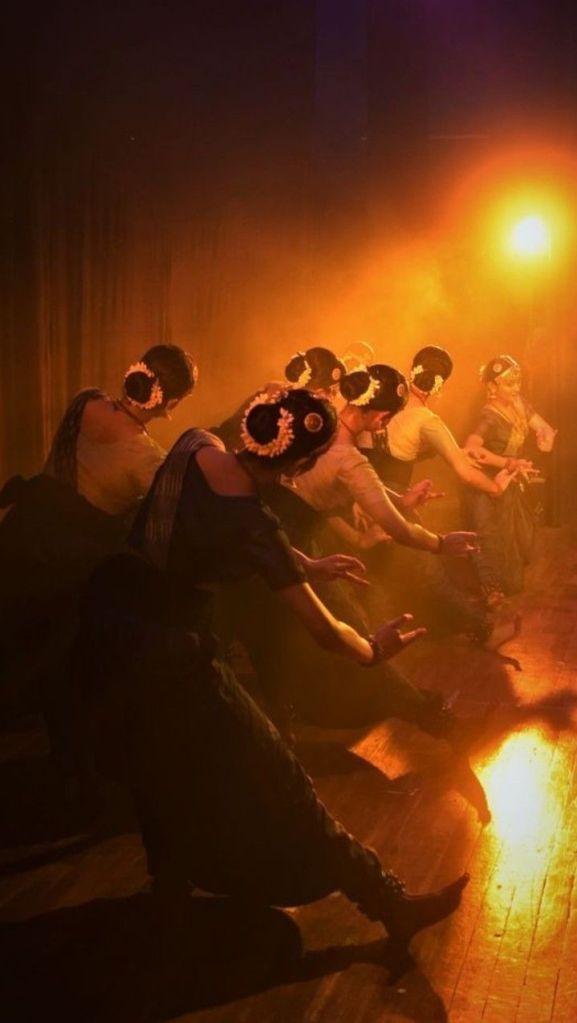


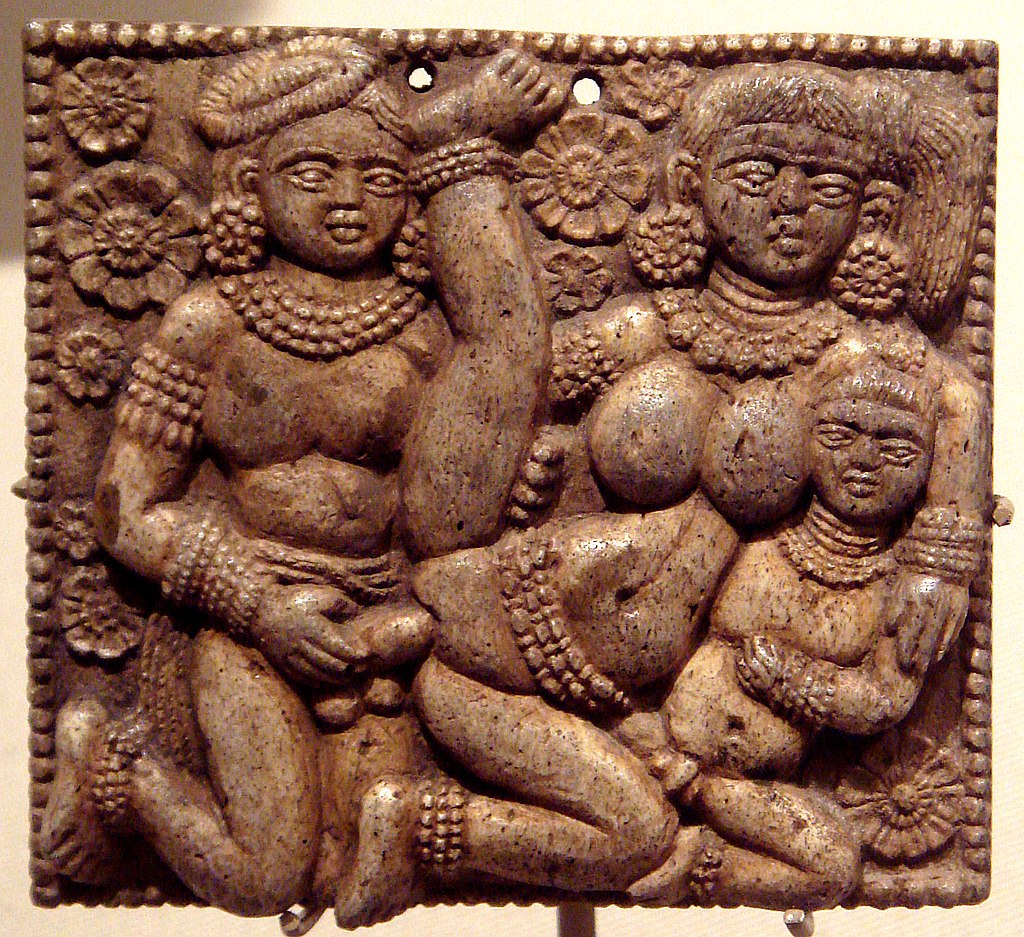
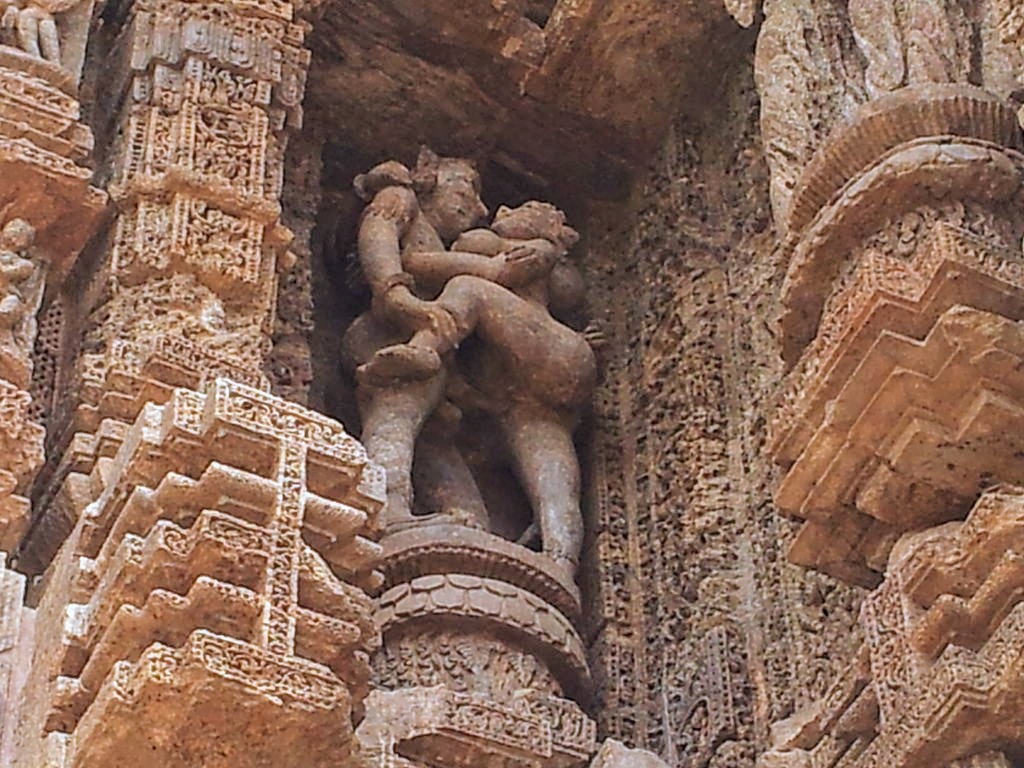


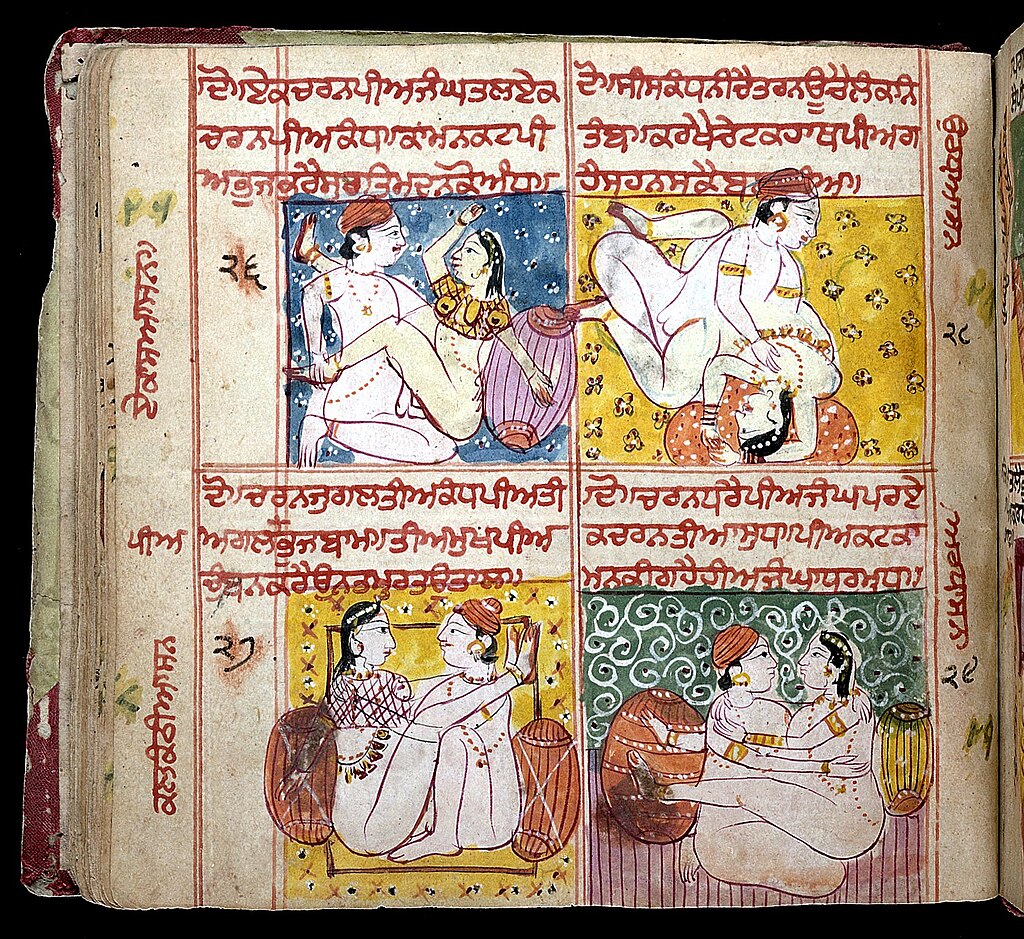


 VAISIKHASUTRA